A Continued Survey of Urban Imagery on Mainland Abu Dhabi; Studies on Reading Public Art
Salem Al Suwaidi
Premise
Salem Al Suwaidi’s current and recurring research focuses on youthfulness and urban imagery in Abu Dhabi, UAE, and the dynamics by which young people in the country can experience a "Right to the City" in our shared infrastructure. In this project extension, the artist planned to survey both commissioned and non-institutionalized public art in mainland Abu Dhabi, including intentional and spontaneous occurrences, and assembling a catalogue that would consist of images, observations, and a detailed assessment of each piece of art and its background, location, and surrounding communities.
In this project extension, I plan to catalogue both commissioned and non-institutionalized public art in the Emirate of Abu Dhabi, including intentional and spontaneous occurrences. The catalogue will consist of images, observations, and a detailed assessment of each piece of art and its background, location, and surrounding communities. I plan to use the concept of the auto-flaneur to reflect on my observations and experiences while cataloguing the art. This concept involves using my car and the time spent in it as a mode of transportation and reflection. I developed the idea of the auto-flaneur during my undergraduate studies, and I believe it will be a valuable tool for exploring the urban environment of Abu Dhabi.
Process
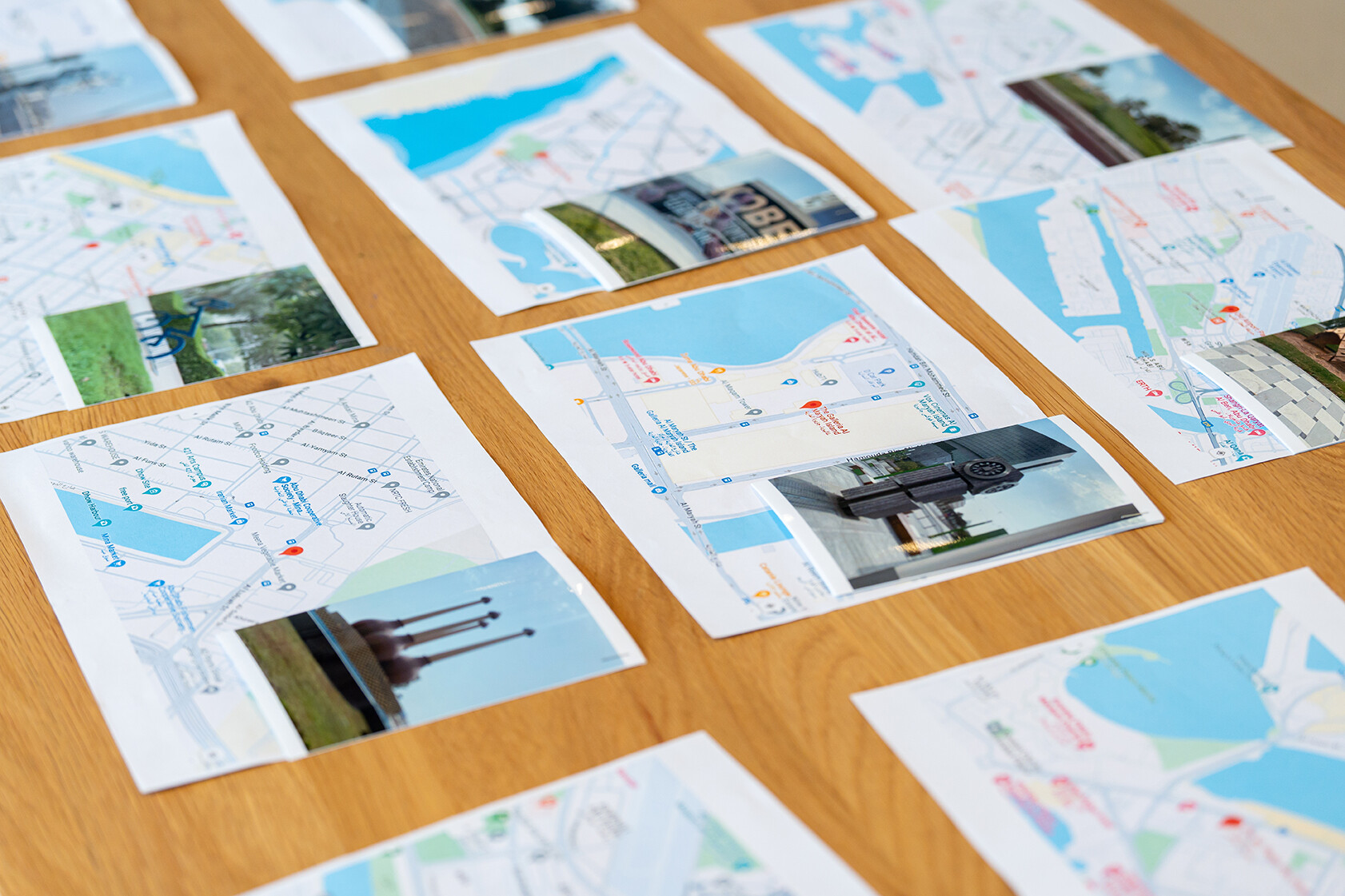
At the start of the residency, Salem utilized the self-determined concept of the auto-flaneur to reflect on his observations and experiences while cataloguing public art. This concept involves using his car and the time spent in it as a mode of transportation and reflection, thus adapting the practice of archiving. It also involved conducting an initial observation of the communities occupying the spaces he surveyed, pin-pointing and documenting positions of interest for himself on maps.
After collecting visual data for approximately two months, the artist began to conduct a reading of these spaces through public programming, which took the form of a series of workshops. All workshops targeted groups of mixed demographics, but were primarily above the age of 18. They were also publicly promoted and free. Four workshops were conducted within the span of another two months:
1. Rock Carving and Painting (with Reem Al Mubarak): Thinking of the land as a medium and how we can create public art that is both hand-made and organic.
2. Sculpture Collaging (with Medyyah Al Tamimi): Visualizing alternative and abstracted figures and monuments through pre-determined material that is then revitalized through the medium of collage to create new imaginaries.
3. Observational Writing (with Maitha Al Omaira): Prose writing after a meditative walk around Mina Zayed, a regenerated urban landscape within Abu Dhabi, and reflecting on our occupancy of that space.
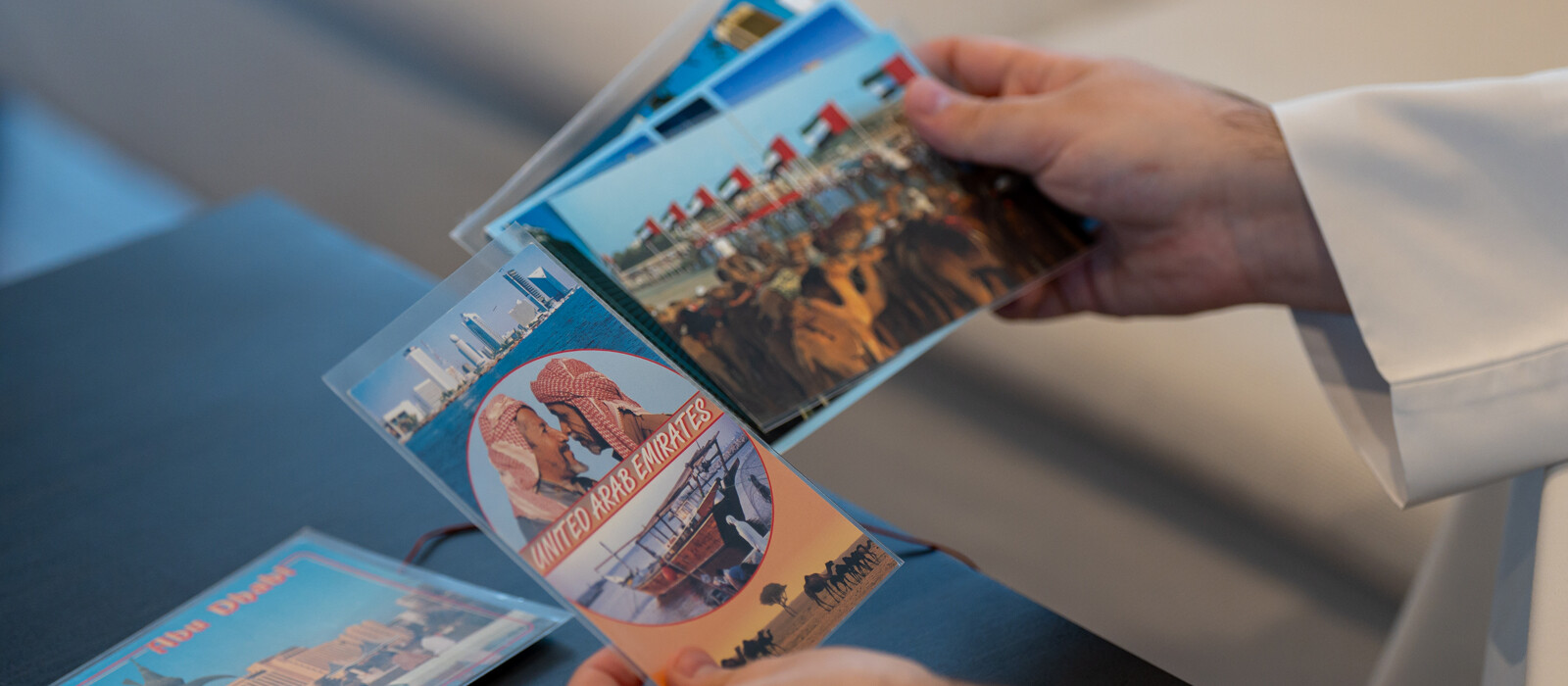
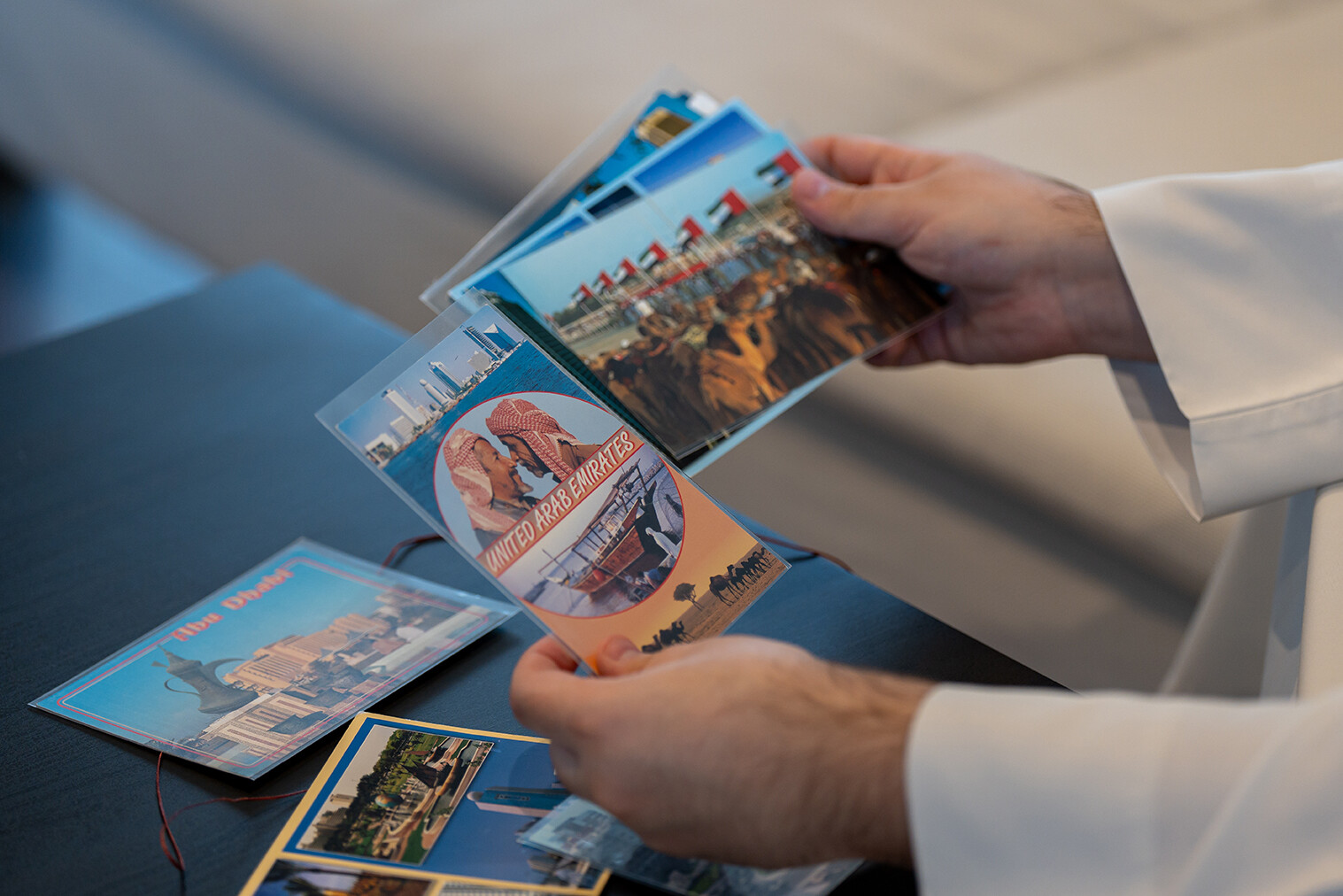
4. Zine Making (with 7ijra, Waraqa, Miqas): Reflecting on collaging, writing, collecting, and documentation through the final format of a zine. This workshop also utilized imagery the artist-as-researcher collected during his surveying and documentation of public art in Abu Dhabi, as well as his online archival research.
Throughout these workshops, Salem began to centre himself within a literary and written practice as he would frequently be reading journals and creative prose on the subject matter of the public realm, alternatively delving into strategic reports to understand how cities intend to utilise public art. As his focus shifted to writing and literature review, he started to fall into a technical rabbit hole of creating terminological definitions, such as public art, public realm, monuments, space, etc., and a typological catalogue for public art, including types, material, length of commission, obstacles, etc. His definitions and catalogue eventually unfolded into a criterion for decommissioning and recommissioning public art and a study on mechanisms to activate de/recommissioning.
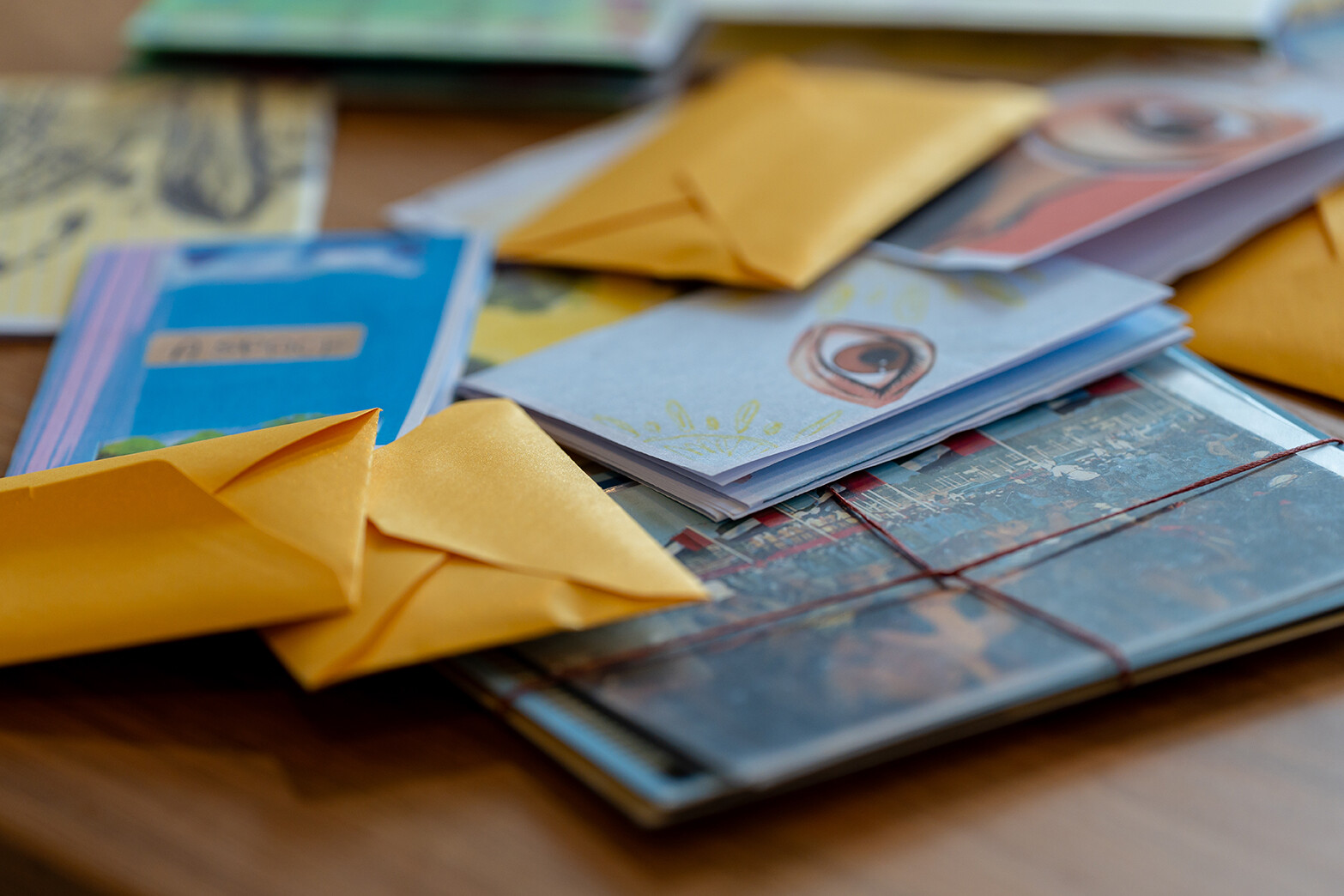
After a month of delving into strategic and bureaucratic thinking, the artist stepped back to reflect on public art in Abu Dhabi through a more personal and abstract lens by partaking in printmaking and collaging using his database of images from the initial city-survey. The playful process of dismantling and reviewing imagery of the public realm naturally led him into a spiral of writing, specifically writing love letters, as he started to feel attached to a number of monuments.
Outcomes
Throughout this research, the artist has been navigating the peripheries of hard-coded review and delicate reflection, attempting to investigate public art in mainland Abu Dhabi as thoroughly as possible, but with careful consideration of the role the public plays in engaging with this type of art within our shared context. Tools such as reading, writing, and driving have sat at the soul of this exploration, but so have dreaming, demanding, and hoping. Thus for Salem, the most natural evolution of this work lies in the format of a manifesto.
A manifesto, to him, is the perfect passageway through which he can voice both his concerns and aspirations for the direction of the heavily bureaucratic nature of Abu Dhabi’s public art. Speculative fiction, analogy and memoir became tools of play to position oneself deeply within structural reality, while journalling and letter-writing communicate grievances within the artist’s research.
Salem extends an invitation now to his readers to also write their own memoirs and letters to their beloved monuments. Letters on delicate paper, living in precious envelopes, sent to structures animated in our collective mind yet physically dormant, potentially destined to part ways with our cities or already passed. While these letters themselves remain private, burying them in our loving memory becomes our shared experience.
Responding to the grievance evoked by the disappearance of beloved public art, zine-making became an optimistic practice and a path to a collective resolution, an act of proposed and practised hope. One where archives live as a shared process, and co-creation is the route to reading the city. Here, we continue to build our visual writings about our public realm through building zines that will forever be accessible to our communities. This study continues in the hands of the audience; only then can we begin to access art that is genuinely in conversation with the public.