
Can Raisins be Used to Marinate Fish and Meat? With Richi Bhatia
17 May
2:00 PM - 5:00 PM

Studio Sessions
Join us for an assemblage-making session with multidisciplinary artist Richi Bhatia where we will get to consider mythological, cultural, and dietary frameworks of food and ecology. We’ll be in dialogue with Apricots on the Nile: A Memoir with Recipes by Colette Rossant, a book that Bhatia has referred to often while making and throughout her practice, as we navigate prompts and build our own assemblages and tablescape.
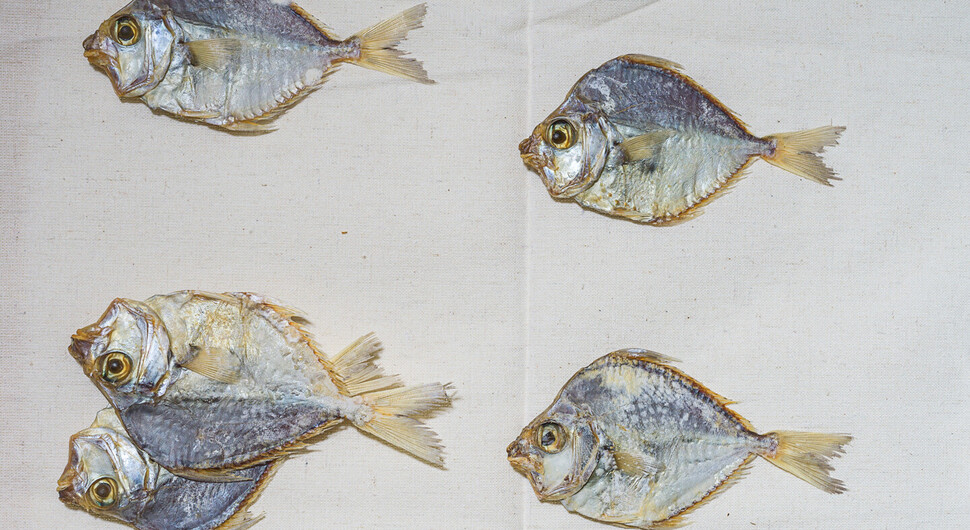
Through the session, we’ll reflect on how marketplaces, particularly fish and meat markets, shape our experiences of public and private spaces, performance, and memory. We’ll draw metaphors, memories, and moments from Rossant’s text to inspire our making, turning everyday objects into sculptural stories. By the end, we’ll share our creations and discuss the myths, narratives, and oral histories surrounding food that have shaped our imaginations.
Participants will leave with hands-on experience in foundational assemblage practices, having built a personal tablescape or assemblage and expanded their understanding of food, ecology, and the cultural frameworks that inform our making.
Accessibility & Participation
Open to ages 11+
No prior experience required.
All materials and tools provided.
Language: English
About the Artist
Richi Bhatia is a multidisciplinary artist whose practice floats between drawing, performance, object making, assemblage, and food intervention. Rooted in experimentation with the body as a medium, her work delves into labor-intensive processes, walking, research, and hand-making. She engages the body as a pressure indicator—an ever-sensing tool responding to memory, food, technology, and environment—to explore the social fabric we inhabit.
A central thread in her work is the slow act of transformation, first catalyzed by her own experience with a skin anomaly and the journey from illness to a prescribed state of ‘normalcy.’ Marketplaces—particularly meat and fish markets—have become key sites of exploration, serving as stages where the private and public meet, and where human-animal interactions unfold in sanitized and performative settings.
Her performances confront the convergence of mind, body, and spectator, turning viewers into co-authors of the work. These investigations are often translated into large scrolls that integrate text, food interventions, and assemblages.