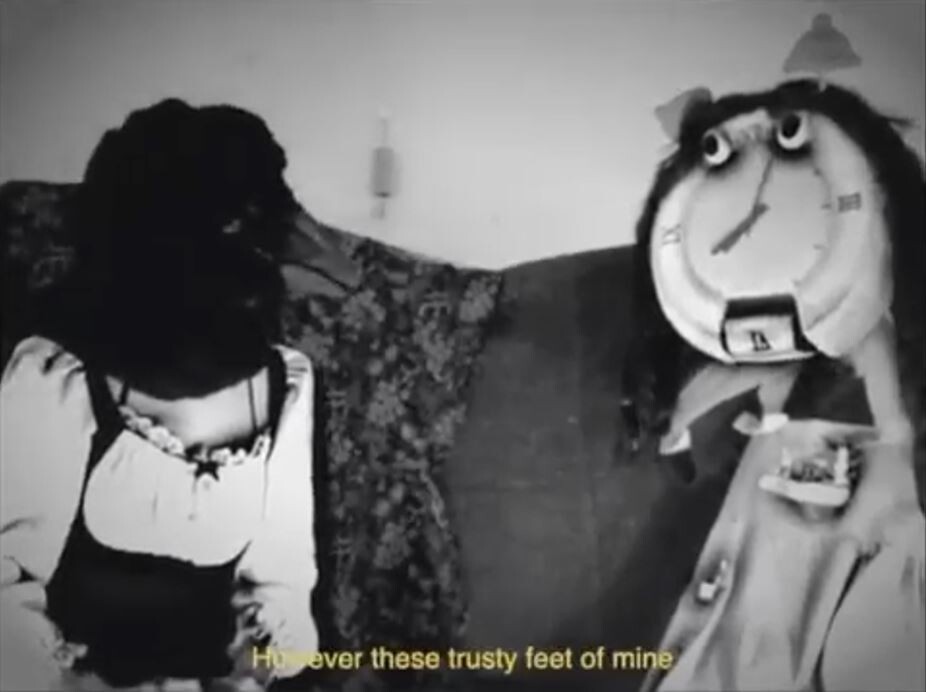
I liked it better when we lived on see-saw hill; Lapses
Yara Asmar
Premise
Throughout this residency, Yara Asmar’s work is centered around death and mourning, on funerary traditions and what remains of them after all this time, on how solitary mourning can be made a little less solitary through the digital spaces we built together. Her objective was to create a body of work that contemplates mourning as an individual as well as a shared experience, and formally combines puppetry, film, and music as a vehicle of expression.
Process
During the months of the residency, the artist found herself in a rapidly morphing place. At the beginning, she embraced this state of change as an opportunity to experiment with media she hadn’t had experience with in the past, such as stained glass. She also got in touch with a priest who generously took the time to walk her through Maronite funerary musical traditions in Lebanon, breaking down its melodies and words. A while after the artist began her residency project, her grandfather fell quite ill and she witnessed what would later on turn out to be his last few months. During this time, Yara spent her days with her grandfather, recording their conversations and essentially mourning him before he had even passed. Towards the end of the residency, she found herself at his funeral, making field recordings – a moment she had inadvertently prepared for.
Outcomes
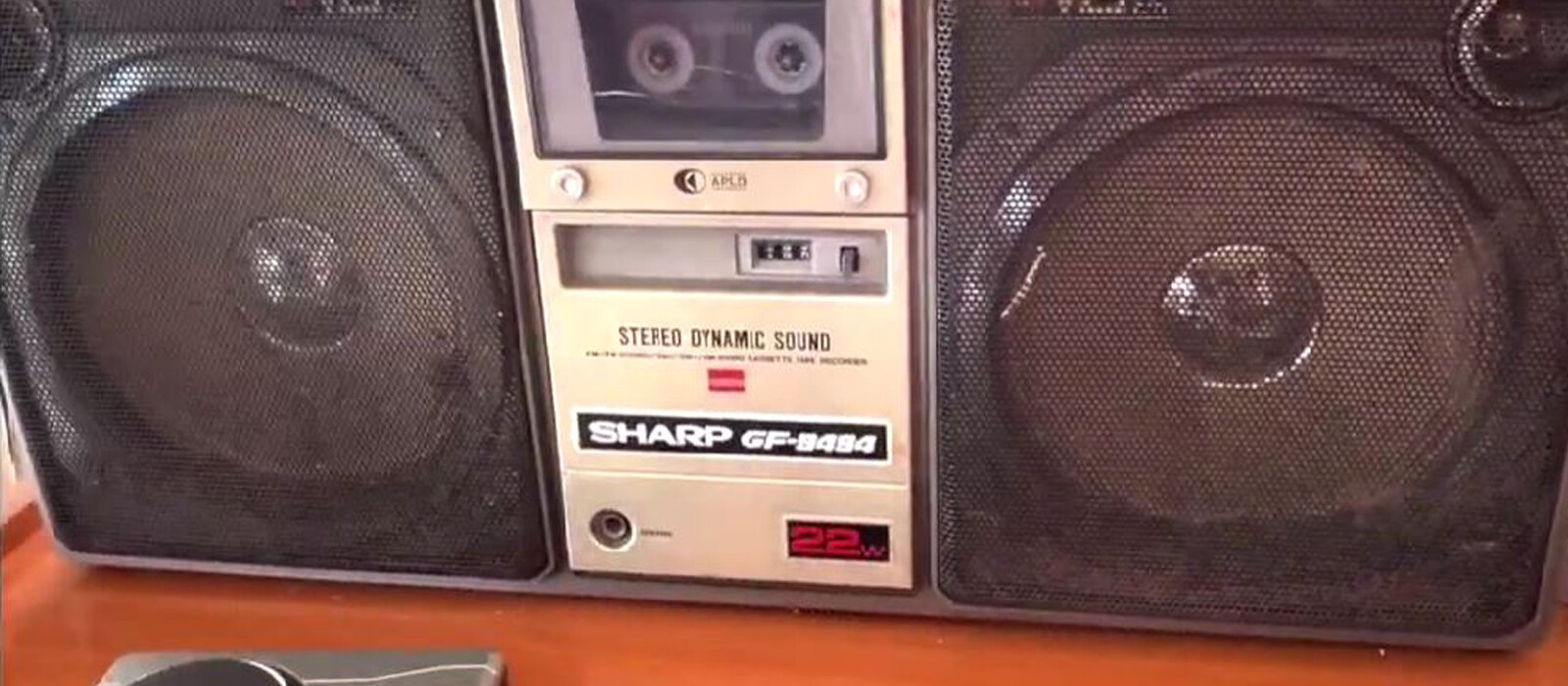
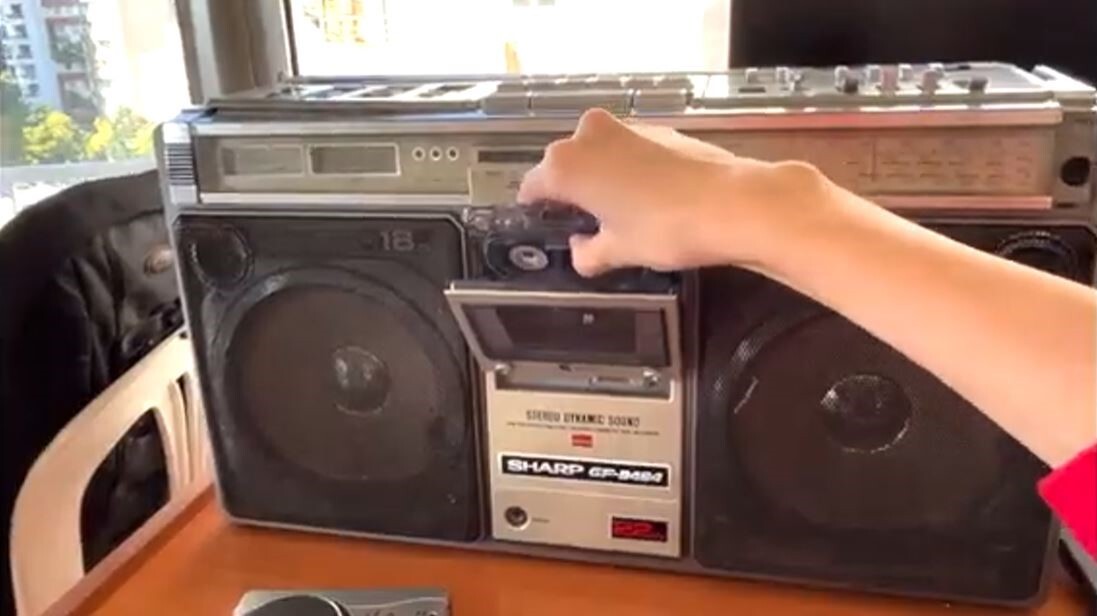
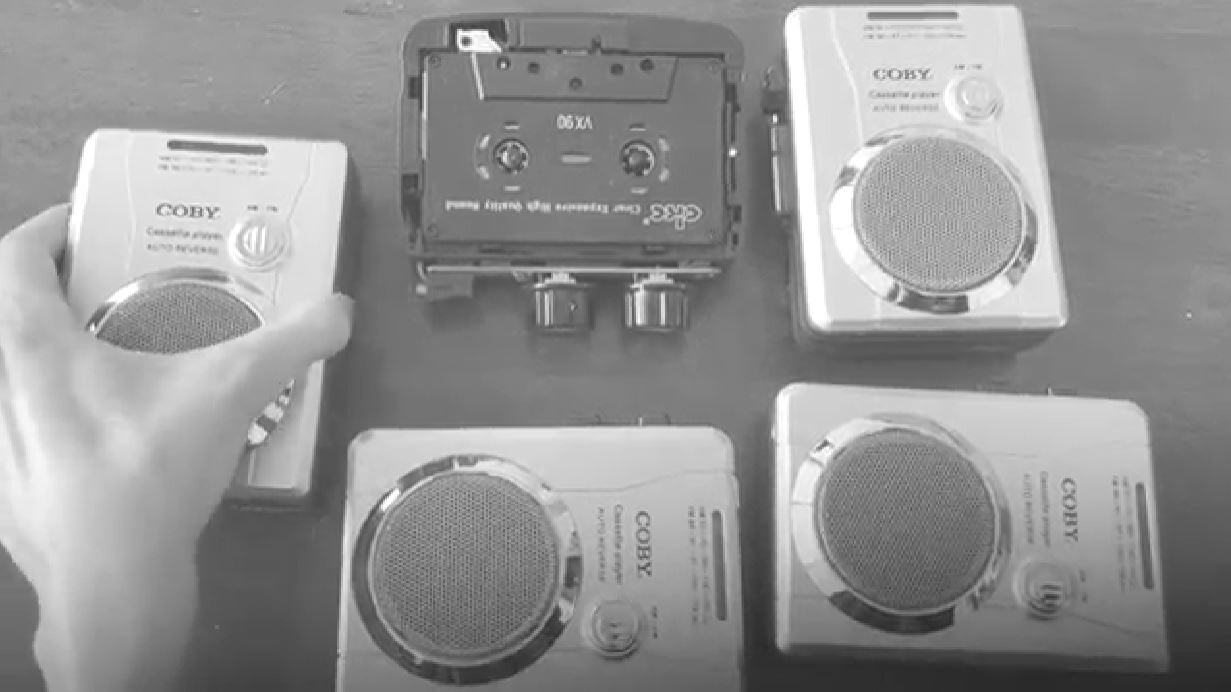
Field recordings and audio compositions of mourning in real time were assembled into an interactive tape loop installation, where the recordings that emerged from this process can be played simultaneously or sequentially. A sonic exploration of the prison of memory and how it survives through tiny loops, little moments suspended in time. These tapes -the more they are played- warp, fray and fade in the way that memories do after they are called upon time after time.
As the listener is left to piece together these sonic excerpts and build them up into soundscapes of moments that belong to someone else, a question of memory and lost time comes to light. What is the boundary of a memory? The listener here is situated in these sonic recollective fragments as much as they are in the ‘out-of -bounds’ of the person whose original memories these belong to. And although they do not share the memories themselves, they share the gaps in between. In that way, both can find a shared space in the blanks of this memory-scape.
In video games, the out-of-bounds is defined as the space out of the area that the player is supposed to stay in. Throughout the years, video games have delimited their maps using different methods, some more obvious than others – a black void or grid outside of the intended playing area, automatically turning the player around, or a written message “you’re not supposed to be here”, “turn back”, “you cannot go past this point”, or through an obstacle (a gigantic cliff) or more punitive methods (death of the player, damage).
In this case, the out-of-bounds or lost time becomes common ground.
Another outcome of this residency is a series of puppet videos, screened on a small TV tower with headphones. These videos recount conversations on shared loss between those who “persist” – people who stay, people who remain after death and loss. Conversations on what it means to stay, to outlive, to remember, and to find a common ground in mourning and memory.